LE BLOG

Why You Don't Understand French Movies (and What Actually Works)
Why I Don't Understand French Movies (and What Actually Works)
You studied French for years. You understand your lessons, your teacher, the exercises. But the moment you press play on a film, it's a wall. It's not your level that's the problem. It's what you've been trained to listen to.
I see this constantly: B1, B2, even C1 learners who have years of French behind them, and who feel completely lost the moment Lupin starts or Le Bureau des Légendes picks up speed without subtitles.
That feeling is normal. But it rests on a false belief: that if you have "enough French," films should be accessible automatically. That's not how it works.
The French spoken in films operates by completely different rules than the French taught in class. In this article, I'm going to show you why, and what you can actually do to change it.
In this article
Reason 1: The vocabulary in films isn't the vocabulary from your lessons
A lot of teachers say 1,000 words are enough to hold a conversation in French. That might be true for a basic exchange. But films are a different story.
Screenwriters work with dialogue coaches whose entire job is to write lines that are precise, layered, rooted in a specific register, a specific era, a social world, a character. The vocabulary in a noir thriller from the 1970s has nothing in common with a contemporary comedy or a Breton crime series.
In HPI, the characters mix casual register, police jargon, and very French cultural references in the same breath. No standard French course prepares you for that. It's not a level problem: it's an exposure problem.
The fix isn't learning more vocabulary lists. It's exposing yourself to different registers: different eras, different social worlds, different genres. The more varied your listening diet, the faster your ear calibrates to real French.
Reason 2: Spoken French doesn't sound like written French
This is the most underestimated reason. And probably the most important.
The French you read in textbooks, hear in FLE classes, and speak yourself is "clean" French: words pronounced in full, liaisons respected, sentences complete. It's the French of dictation exercises and grammar tests.
Natural spoken French, the kind you hear in films, works by entirely different rules. Sounds get swallowed. Words fuse together. Syllables disappear. These are the phonetic patterns of real spoken French, and they're almost never taught explicitly.
"Je ne sais pas" becomes "chais pas." "Il y a" becomes "y'a." "Tu as" becomes "t'as." "Parce que" becomes "pasque." Even "okay" in French sounds nothing like you'd expect: in everyday speech, it often comes out closer to "okay" said at half the speed, swallowed into the surrounding sentence. These aren't mistakes. This is how French people actually talk to each other, every single day.
If you've never been trained to hear these patterns, your brain simply doesn't know where one word ends and the next begins. You're not failing to understand French. You're failing to understand real French, because no one ever showed it to you.
The most effective technique I know for closing that gap is shadowing: listening to a short extract and repeating it out loud immediately, mimicking the rhythm, the intonation, the run-on sounds. It's not mechanical repetition. It's training your ear to process French at natural speed, the way a French person hears it. If you want to go deeper on this, I have a full course dedicated to it: Shadowing Express.
Reason 3: Cultural references are invisible if you don't have the keys
A French joke, a political allusion, a regional expression, a reference to a historical event: all of it passes right over your head if you don't have the context. And yet these are often the moments that carry the most weight in a scene.
French culture doesn't live in a dictionary. It's acquired through immersion, through curiosity, and often through someone who can give you the explanation you won't find on Google.
When a character in Dix pour cent makes a reference that the whole room laughs at and you have no idea why, that's not a vocabulary failure. That's a cultural gap. The good news: it's one of the most enjoyable things to fill in.
The Clap Français approach: what's different
Since 2020, I've been helping intermediate and advanced learners understand French films and series without subtitles. It's not a magic promise. It's a structured method that works on all three reasons above simultaneously.
The approach rests on three pillars:
- Vocabulary in context: we work with real extracts, not abstract lists. Every word is anchored in a scene, a character, a situation you've already heard.
- Shadowing and spoken French patterns: we break down how real French sounds so your ear recognises it even at full speed. You can find my full pronunciation playlist here.
- Culture and references: we decode what French people understand implicitly, so you stop missing the layers of meaning in every scene.
What you can do right now to improve your French listening comprehension
Before you press play
- Read the synopsis and a short review so you're not lost in the plot from the first scene
- Watch the trailer to get your ear accustomed to the voices and the rhythm of the dialogue
- Note the genre, the era, the social milieu: it primes you for the register you're about to hear
While you watch
- Note words or phrases you hear but can't place. Don't pause every 30 seconds: let the story move, context carries a lot
- Use what you see: emotion, gesture, silence. Paralanguage is information
- If you understood 40% of a difficult film, that's not a failure. That's data. Native French speakers miss words in their own language too
After you watch
This is where real progress happens. A few approaches by level:
- Write a short summary of the film in French, then read it out loud
- Pick 5 new words or expressions you want to actually use and note them in a sentence
- Record a 2-minute oral summary of a key scene and listen back to yourself
- Note every instance of the subjunctive you heard or saw in the French subtitles
- Compare what the subtitles say to what you actually heard: note every gap
- Transcribe a full scene word for word. It's the most powerful exercise I know for understanding native French speakers at full speed
Ready to train your ear on real French?
The Pack Vocabulaire Séries Netflix is built around real series dialogue: the vocabulary, the register, the cultural references. Everything your textbook never covered.
Discover the Pack — 99€Why films are your best investment for French
Watching French films with a learning goal is not passive. That's exactly what makes it the most complete tool that exists for a language:
There's something else few methods offer: pleasure. Some of my students have gotten so absorbed in French cinema that they joined me at a French series festival in Lille. When learning becomes a pursuit, progress accelerates in ways no lesson plan can engineer.
Going from "I understand nothing" to "I turned off the subtitles and got most of it" takes time. But there's no better tool in the box. Because in real life, nobody speaks with subtitles.
If you want to work on shadowing alongside your listening, start with the Shadowing Express. And if you're not yet sure where you stand, take the free level test below. It analyses your reflexes on real film extracts and tells you exactly what to work on first.
Not sure where to start?
Take the free level test: it analyses your reflexes on real French film extracts and tells you exactly what to focus on first.
Take the free testQuel personnage de série française es-tu ?
8 questions pour découvrir ton profil d'apprenant et les séries faites pour toi.
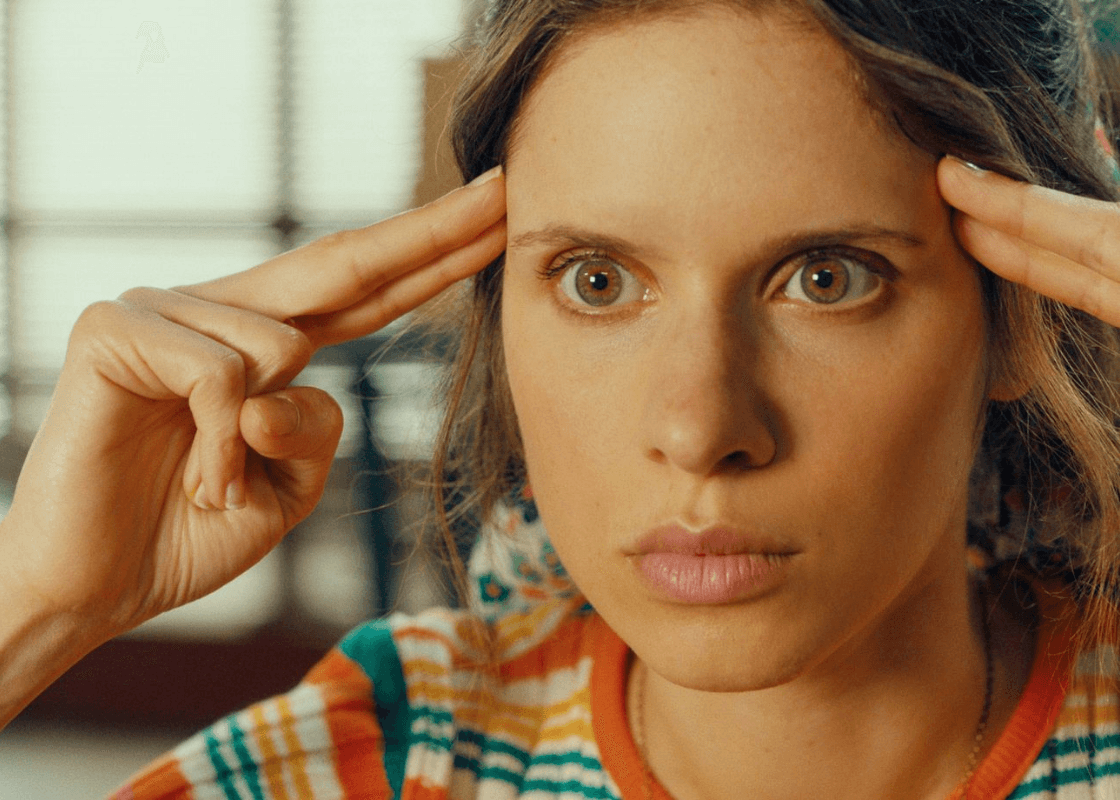


This quiz is in French. That's part of the experience.
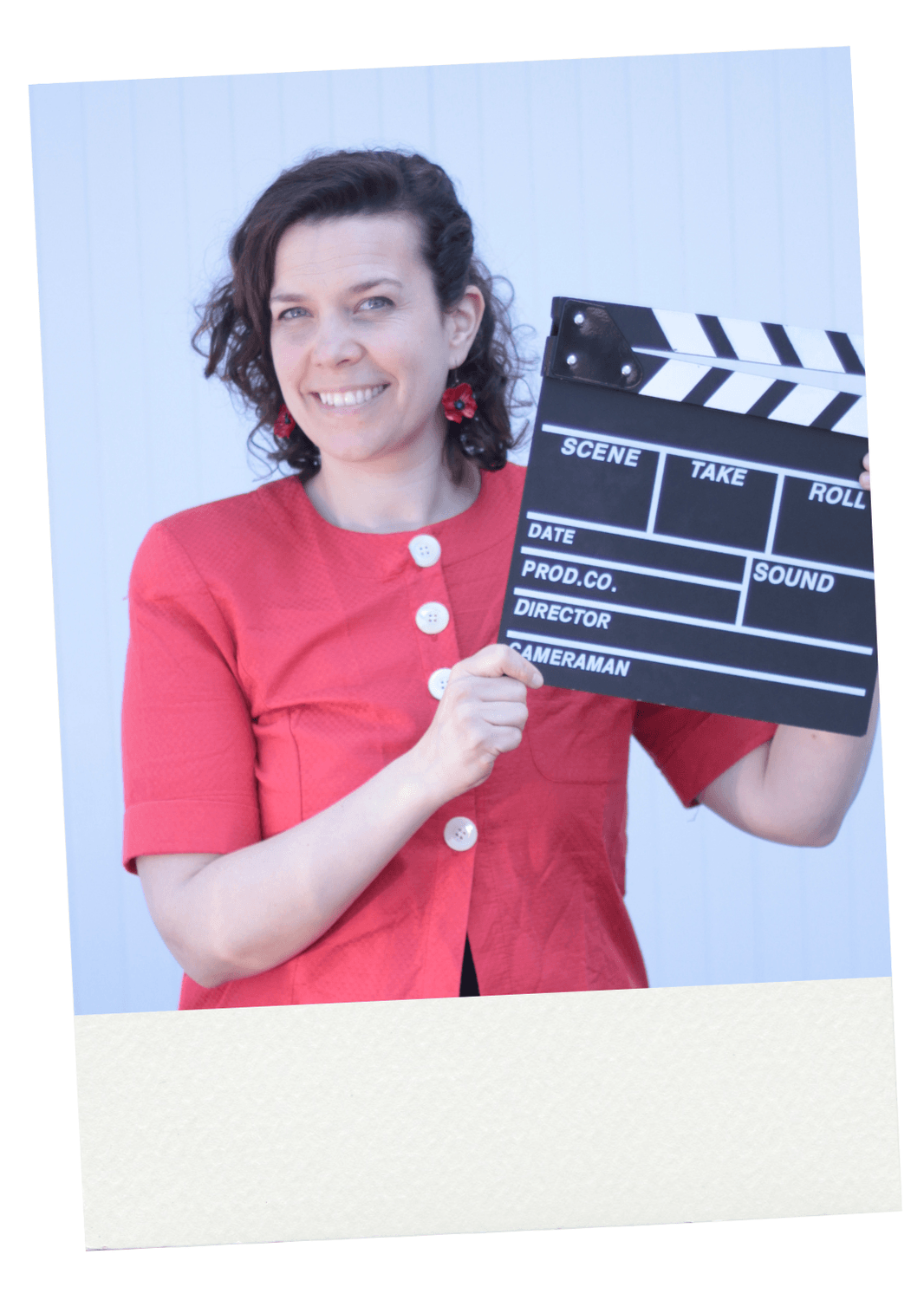
Marion
Professeure de FLE et diplomée de cinéma, je parle 3 langues couramment et je peux parler cinéma et série pendant des heures. Ma spécialité ? Le shadowing pour améliorer ton accent.
popular
Le club